
AdapT-CCASCOE Research Chair
AdapT-CCASCOE Research Chair on the Adaptation of Infrastructure to Climate Change
Institut AdapT at the École de technologie supérieure (ÉTS) and the NATO Climate Change and Security Centre of Excellence (CCASCOE) are launching a call for proposals for a research chair on the topic of infrastructure adaptation to climate change. This chair will be funded by a grant awarded to Institut AdapT by the Fonds de recherche du Québec (FRQ).
The mission of Institut AdapT is to develop innovative solutions for the design, construction, and operation of a built environment that is resilient to climate change in the context of the transition to a circular, low-carbon economy. Acting as a one-stop shop, it brings together academic, scientific, governmental, civil, and industrial stakeholders to accelerate the adaptation of infrastructure to climate change.
The NATO Climate Change and Security Centre of Excellence (CCASCOE) aims to become an international benchmark for expertise on the links between climate change and security. To fulfil this mission, CCASCOE works with governments, international organisations, academia, think tanks and industry to stimulate innovation, strengthen cooperation amongst NATO Allies and partners, and harness scientific and operational knowledge. The Centre also helps to raise awareness amongst decision-makers and the general public of the importance of taking concrete action to build resilience and safeguard security in the face of the growing challenges posed by climate change.
Funding a research program
The funding allocated for the implementation of the proposed research programme is $125,000 per year, for a period of four years, subject to continued annual funding from the FRQ. The majority of these funds must be allocated to scholarships and salaries for the research team, primarily undergraduate, Master’s and PhD students, and postdoctoral researchers. The selected chair must be proposed by at least two co-holders from two different disciplines or working in different fields of research, at least one of whom must be a member of the ÉTS academic staff.
The proposed research programme should address issues relating to the adaptation of infrastructure to climate change and fall within one or more of the CCASCOE’s adaptation pillars set out below. The proposal must also demonstrate the commitment of at least one partner from the defence or security sector, through a financial and/or in-kind contribution to the research programme. This requirement is intended to ensure that research is grounded in the actual needs of the defence and security sector, and to encourage the development of long-term collaborations between the research and professional communities. The term infrastructure is used in a broad sense and may include, in particular, buildings, transport infrastructure, energy transmission infrastructure, drinking water production and distribution infrastructure, wastewater disposal and treatment infrastructure, as well as recreational and sports facilities.
Adaptation Pilliars of the CCASCOE1
Climate relevance: Incorporate climate-related considerations into planning and policy frameworks, long-term strategic assessments and foresight, operational doctrines and crisis response strategies.
Preparing for climate change: Ensure that NATO forces are ready to generate and project power effectively, by adapting procurement practices and cooperation with industry to address both the direct impacts of extreme weather events and the indirect effects of long-term climate change.
Climate resilience : To prepare for, withstand, respond to and recover from climate-induced strategic shocks through an integrated approach to risk and resilience, incorporating both military and civilian dimensions, in order to ensure NATO’s operational continuity.
Eligibility
The co-holders must hold a permanent or tenure-track professor position at a Quebec university. At least one of the co-holders must hold such a position at ÉTS.
A preliminary eligibility check will be carried out. Proposals whose research programme does not align with the chair’s objectives and research areas, or which do not demonstrate the commitment of at least one partner from the defence or security sector through a financial and/or in-kind contribution, will not be selected for the scientific evaluation stage.
Submission of applications
All applications will be treated confidentially.
We will take into account the impact of leave that may have caused interruptions or slowdowns in your career. In this regard, we encourage you to inform us of any leave that may have affected your professional trajectory. We will consider this information when evaluating applications.
Interested candidates are requested to submit their applications by 29 January 2027, 11.59 pm (EST).
The application must include the following documents:
- Curriculum Vitae of the joint holders (FRQ descriptive CV https://frq.gouv.qc.ca/cv-frq/)
- Letter of support and participation from the project partner
- Research program (5 pages)
- Problematic
- Objectives
- Methodology
- Budget
- Expected results
- Bibliographic references (not included in the 5 pages)
- A statement highlighting the potential benefits of the proposal in relation to the AdapT Institute’s mission, its potential impact on CCASCOE partners and its multidisciplinary nature (2 pages)
The application can be submitted in French or English, in a single PDF document, using Times New Roman 12 font, to the email address: InstitutAdapT@etsmtl.ca
Evaluation criteria
- Research excellence of the holder(s) according to the criteria of the San Francisco Agreement (DORA) – 30%
- Merit of the research program proposal – 40%;
- Relevance of the proposal in relation to the theme of the chair – 15%
- Multidisciplinarity of the research proposal – 15%.
Commitment to diversity
ÉTS values the diversity of the people it hires. The School is committed to Engineers Canada’s 30/30 program, which aims to reach 30% women engineers by 2030, and received the Thérèse Casgrain Award in 2019 for its efforts in promoting the inclusion of women in engineering. ÉTS implements an employment equity program and invites individuals from underrepresented groups, including women, Indigenous peoples, visible and ethnic minorities, and persons with disabilities, to self-identify when submitting their application. People of all sexual orientations and gender identities are also encouraged to apply.
Terms and conditions of the chair
As the Chair is partly funded by the Fonds de recherche du Québec (FRQ), the allocation and management of the funds will be subject to certain administrative and financial rules. The amounts awarded will be divided into two categories of funds: flexible funds and non-flexible funds, each with specific periods of use.
Flexible funds may be carried over from one financial year to the next until 31 March 2031. Non-flexible funds must be spent within the specified period and may not be carried over to the following financial year without prior authorisation.
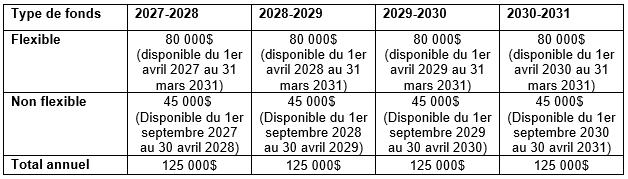
The funding agreement between AdapT and the Fonds de recherche du Québec will be up for renewal during the 2029–2030 financial year. Should this agreement be renewed, the terms and conditions governing the disbursement and management of funds may be revised to take account of the new funding conditions.
If you have any questions, please contact: InstitutAdapT@etsmtl.ca
[1] All the pillars available here: https://ccascoe.org/wp-content/uploads/2026/03/CCASCOE-Pillars-Infographic.pdf
Don’t just coexist with climate change.
